New Communities for New Times: Women, Values, and Changing Ways of Life

New Communities for New Times: Women, Values, and Changing Ways of Life
Over the past few decades, women’s ways of living have changed dramatically. From shifts in the workplace and family structures to the rise of digital networks and new social values, women in the United States are shaping communities that look very different from those of previous generations. These changes are not only about equality and career opportunities but also about identity, belonging, and finding meaningful ways to live in a time when both freedom and community are being redefined.
From Women’s Movements to Networks and Digital Communities
In the 1970s and 1980s, women’s communities were often political and physical—feminist collectives, women’s centers, and grassroots movements focused on rights and representation. Today, communities are more fluid and often digital. Women connect through online groups, professional networks, and shared-interest communities centered on entrepreneurship, sustainability, motherhood, or mental health.
These new communities are less tied to geography and more grounded in shared values. They can emerge on social media, in coworking spaces, or through local initiatives such as community gardens and mutual aid projects. What unites them is a desire to create meaning, support, and connection in a complex and fast-changing world.
Changing Values
Where earlier generations often defined success through family stability and traditional roles, many women today seek a balance between self-realization, community, and sustainability. Values like freedom, flexibility, and authenticity carry more weight than fixed norms about what a “successful life” should look like.
This shift also means that life choices have become more individual. Some women prioritize their careers, while others choose to work less to make time for volunteering, travel, or creative pursuits. Many try to combine multiple roles—mother, professional, friend, activist—without being confined by traditional expectations.
Læs også:

New Ways of Living—Between Freedom and Connection
Modern life offers women more choices than ever, but also more demands. Flexibility can bring freedom, but it can also create uncertainty. Many women find themselves building their own structures and searching for new ways to feel connected.
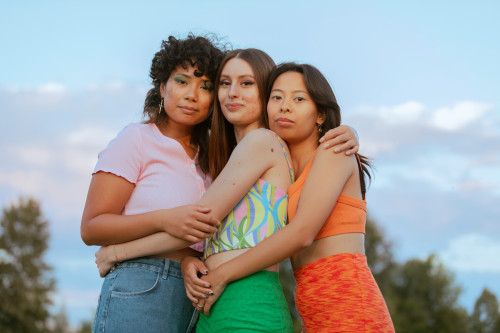
Here, communities play a vital role. They provide support, inspiration, and a sense of belonging. Whether it’s a network for women entrepreneurs, a local mothers’ group, a feminist book club, or a neighborhood initiative, these spaces allow women to share experiences and draw strength from one another’s stories.
Generational Perspectives
The transformation of women’s lives is visible across generations. Older women who grew up with more rigid gender roles often look with admiration—and sometimes surprise—at the freedom younger women claim. Younger generations, in turn, experience that freedom as both empowering and demanding: the expectation to “have it all” can be as stressful as it is liberating.
Dialogue between generations can be a source of insight. Many younger women seek advice from older ones, while older women find inspiration in the younger generation’s courage to challenge norms. This exchange fosters new forms of solidarity and understanding across age and life experience.
Community as a Response to Individualism
In an era that prizes individual achievement, community has become a conscious choice. Many women are coming together to create spaces where they can be themselves without pressure to perform. These may take the form of discussion circles, creative workshops, or shared movement practices like yoga and dance.
Such communities are not only about social connection but also about finding meaning and direction in a fragmented world. They offer a place to rediscover the value of presence, care, and collective action.
A New Story of Women’s Lives
Women’s lives today cannot be captured by a single story. They consist of many voices, choices, and ways of living. What they share is a desire to build lives that are sustainable—personally, socially, and environmentally.
The new communities women are creating show that their lives are no longer defined by fixed boundaries but by the ability to connect, adapt, and find meaning in change. It is a movement pointing toward a future where freedom and community are not opposites, but essential partners in shaping a more balanced and humane society.
Læs også: